Computer Science Engineering (Data Science) - GNIET Nagpur | B.Tech CSE DS

Computer Science & Engineering (Data Science) | Information Technology

About Department

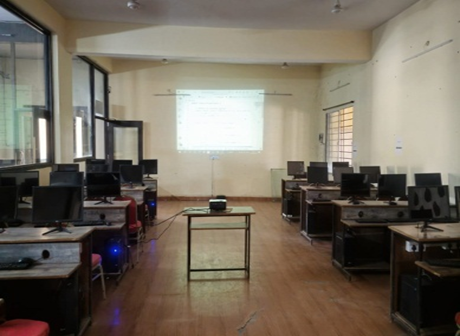
The Department of Computer Science & Engineering (Data Science) and Information Technology is committed to providing quality education, technical excellence, and practical learning in emerging technologies.

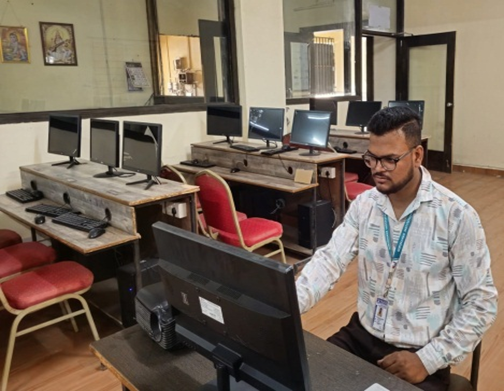
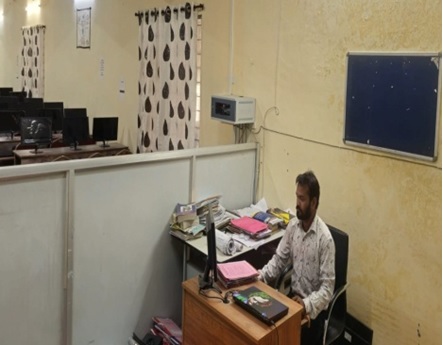
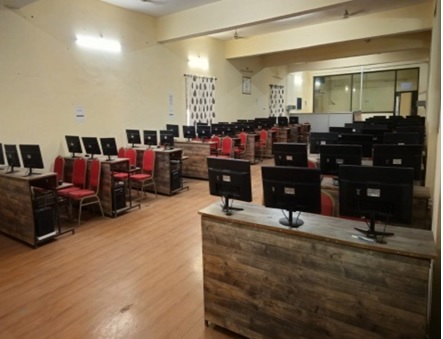
The departments focus on academic growth, innovation, and skill development through experienced faculty members and modern laboratories.

Various workshops, seminars, technical activities, and industrial visits are regularly organized to enhance students' technical knowledge and employability skills.

The departments also encourage industry interaction, internships, and hands-on training to prepare students for successful careers in the IT and software industries.

Vision & Mission

Vision
  • To be a center of excellence in Information Technology education by fostering innovation, technical expertise, research, and ethical values to meet global technological challenges.
Mission
  • To provide quality education in Information Technology through strong academic and practical learning.
  • To develop skilled professionals with problem-solving, analytical, and leadership abilities.
  • To encourage research, innovation, entrepreneurship, and lifelong learning among students.
  • To strengthen industry interaction through projects, internships, workshops, and technical activities.
  • To nurture socially responsible and ethically committed IT professionals for the betterment of society.

Head of Department

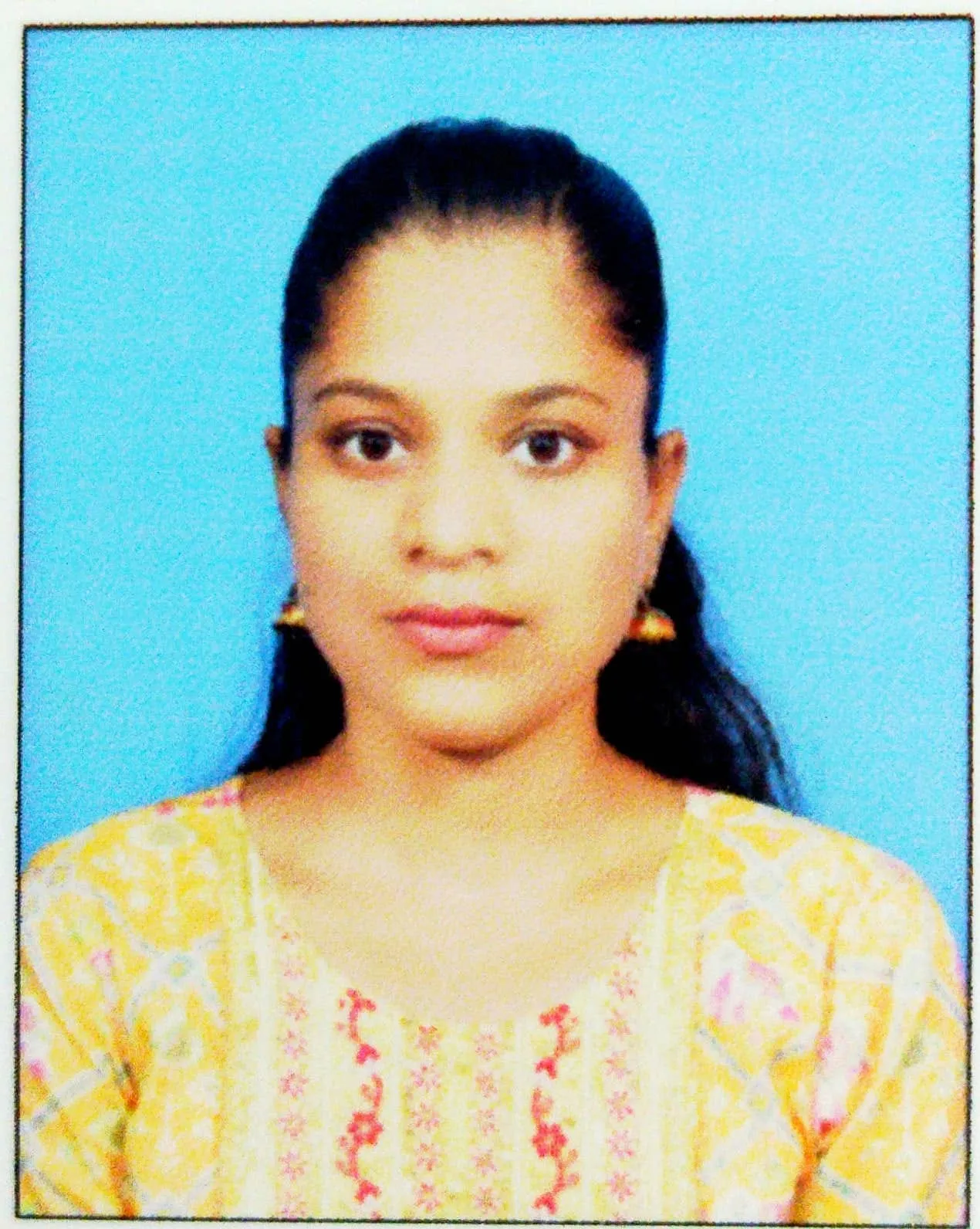
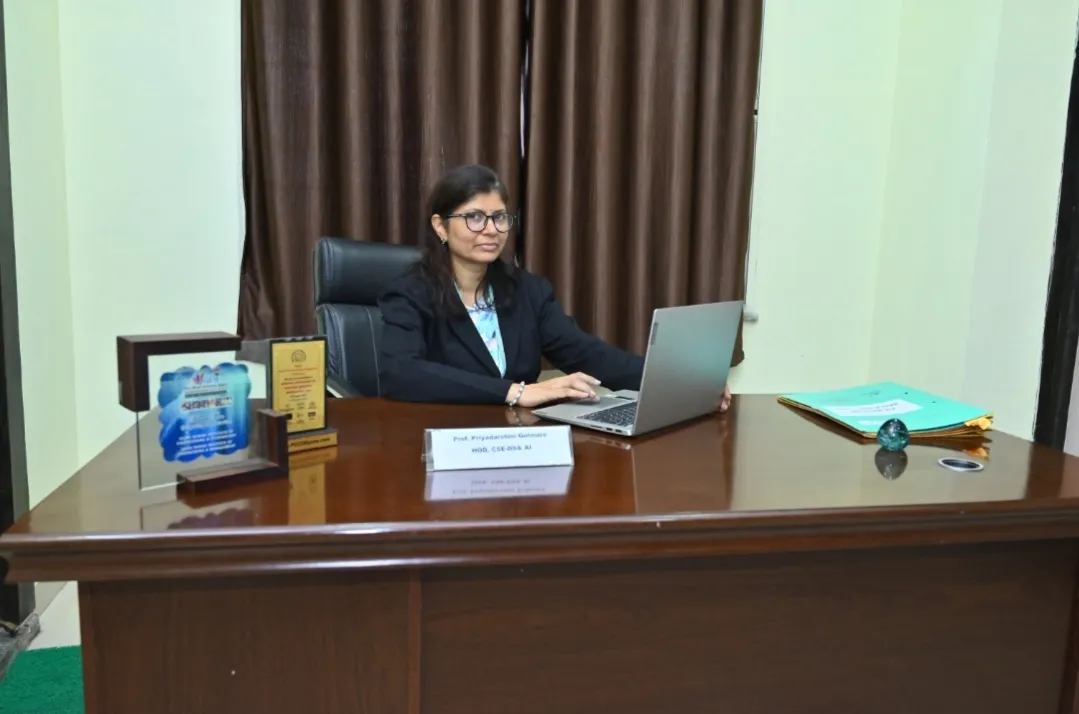
Ms. Priyadarshini Gotmare

Welcome to the Department of Computer Science & Engineering (Data Science) and Information Technology at Guru Nanak Institute of Technology. Our departments are committed to providing quality education, technical excellence, and practical exposure in the rapidly growing fields of Data Science and Information Technology.

We focus on developing skilled, innovative, and industry-ready professionals through modern laboratories, experienced faculty members, workshops, seminars, industrial visits, and hands-on learning opportunities. Our aim is to prepare students to meet the challenges of the evolving IT industry with confidence, knowledge, and ethical values.

We encourage students to actively participate in academic, technical, and co-curricular activities for their overall growth and successful career development.

Ms. Priyadarshini Gotmare

Head of Department

Program Offered / Intake

B.Tech. in Computer Science & Engineering (Data Science)
Name of the UG Program B.Tech. in Computer Science & Engineering (Data Science)
Number of Intake 60
Duration of Course 4 years
Year of Starting 2023
B.Tech. in Information Technology
Name of the UG Program B.Tech. in Information Technology
Number of Intake 60
Duration of Course 4 years
Year of Starting 2024

POs & PSOs

Bachelor of Technology in Computer Science & Engineering (Data Science)

Program Outcomes (POs)

  • PO1: Engineering Knowledge: Apply the knowledge of mathematics, science, engineering fundamentals, and engineering specialization to the solution of complex engineering problems.
  • PO2: Problem analysis: Identify, formulate and analyze hardware and software engineering problems and arrive at substantiated conclusions using first principles of mathematics, natural and engineering sciences.
  • PO3: Design/Development of solutions: Design and develop hardware / software system to meet desired needs within realistic constraints related to economic, environmental, social, political, ethical, health and safety, verifiability, and sustainability concerns.
  • PO4: Conduct investigations of complex problems: Use research based knowledge including design of experiments, analysis and interpretation of data and synthesis of the information to provide valid conclusions.
  • PO5: Modern tool usage: Use techniques, skills, and modern computer engineering tools, including simulation and modeling, for addressing the needs of engineering profession and interdisciplinary business.
  • PO6: The engineer and society: Understand the computing needs of inter-disciplinary scientific and engineering disciplines and design and develop algorithms and techniques for societal, health, safety, legal and cultural problems.
  • PO7: Environment and Sustainability: Understand the impact of the professional engineering solutions in societal and environmental contexts, and demonstrate the knowledge of and need for sustainable development.
  • PO8: Ethics: Apply ethical principles and commit to professional ethics and responsibilities and norms of the engineering practice.
  • PO9: Individual and team work: Function as member or leader of team and to understand engineering management principles & finance to manage projects in multidisciplinary environment.
  • PO10: Communications: Effectively transfer technology to engineering community and society at large on broadly defined engineering needs through technical reports, presentations and software technologies.
  • PO11: Project management and finance: Demonstrate knowledge and understanding of engineering and management principles and apply these to one's own work, as a member and leader in a team. Manage projects in multidisciplinary environments.
  • PO12: Life-long learning: Engage in lifelong learning and adapt to rapid changes in computer science & allied areas.

Program Specific Outcomes (PSOs)

  • PSO1: An ability to apply mathematical foundations, algorithmic principles and data science theory in the modeling and design of software systems of varying complexity.
  • PSO2: An ability to work with Open Source Software and use off the shelf utilities for program integration.

Bachelor of Technology in Information Technology

Program Outcomes (POs)

  • PO1: Engineering Knowledge: Apply the knowledge of mathematics, science, engineering fundamentals, and engineering specialization to the solution of complex engineering problems.
  • PO2: Problem analysis: Identify, formulate and analyze hardware and software engineering problems and arrive at substantiated conclusions using first principles of mathematics, natural and engineering sciences.
  • PO3: Design/Development of solutions: Design and develop hardware / software system to meet desired needs within realistic constraints related to economic, environmental, social, political, ethical, health and safety, verifiability, and sustainability concerns.
  • PO4: Conduct investigations of complex problems: Use research-based knowledge including design of experiments, analysis and interpretation of data and synthesis of the information to provide valid conclusions.
  • PO5: Modern tool usage: Use techniques, skills, and modern computer engineering tools, including simulation and modeling, for addressing the needs of engineering profession and interdisciplinary business.
  • PO6: The engineer and society: Understand the computing needs of inter-disciplinary scientific and engineering disciplines and design and develop algorithms and techniques for societal, health, safety, legal and cultural problems.
  • PO7: Environment and sustainability: Understand the impact of the professional engineering solutions in societal and environmental contexts, and demonstrate the knowledge of and need for sustainable development.
  • PO8: Ethics: Apply ethical principles and commit to professional ethics and responsibilities and norms of the engineering practice.
  • PO9: Individual and team work: Function as member or leader of team and to understand engineering management principles & finance to manage projects in multidisciplinary environment.
  • PO10: Communications: Effectively transfer technology to engineering community and society at large on broadly defined engineering needs through technical reports, presentations and software technologies.
  • PO11: Project management and finance: Demonstrate knowledge and understanding of engineering and management principles and apply these to one's own work, as a member and leader in a team. Manage projects in multidisciplinary environments.
  • PO12: Life-long learning: Engage in lifelong learning and adapt to rapid changes in computer science & allied areas.

Program Specific Outcomes (PSOs)

  • PSO1: An ability to apply mathematical foundations, algorithmic principles and computer science theory in the modeling and design of software systems of varying complexity.
  • PSO2: An ability to work with Open-Source Software and use off the shelf utilities for program integration.

Faculty Details

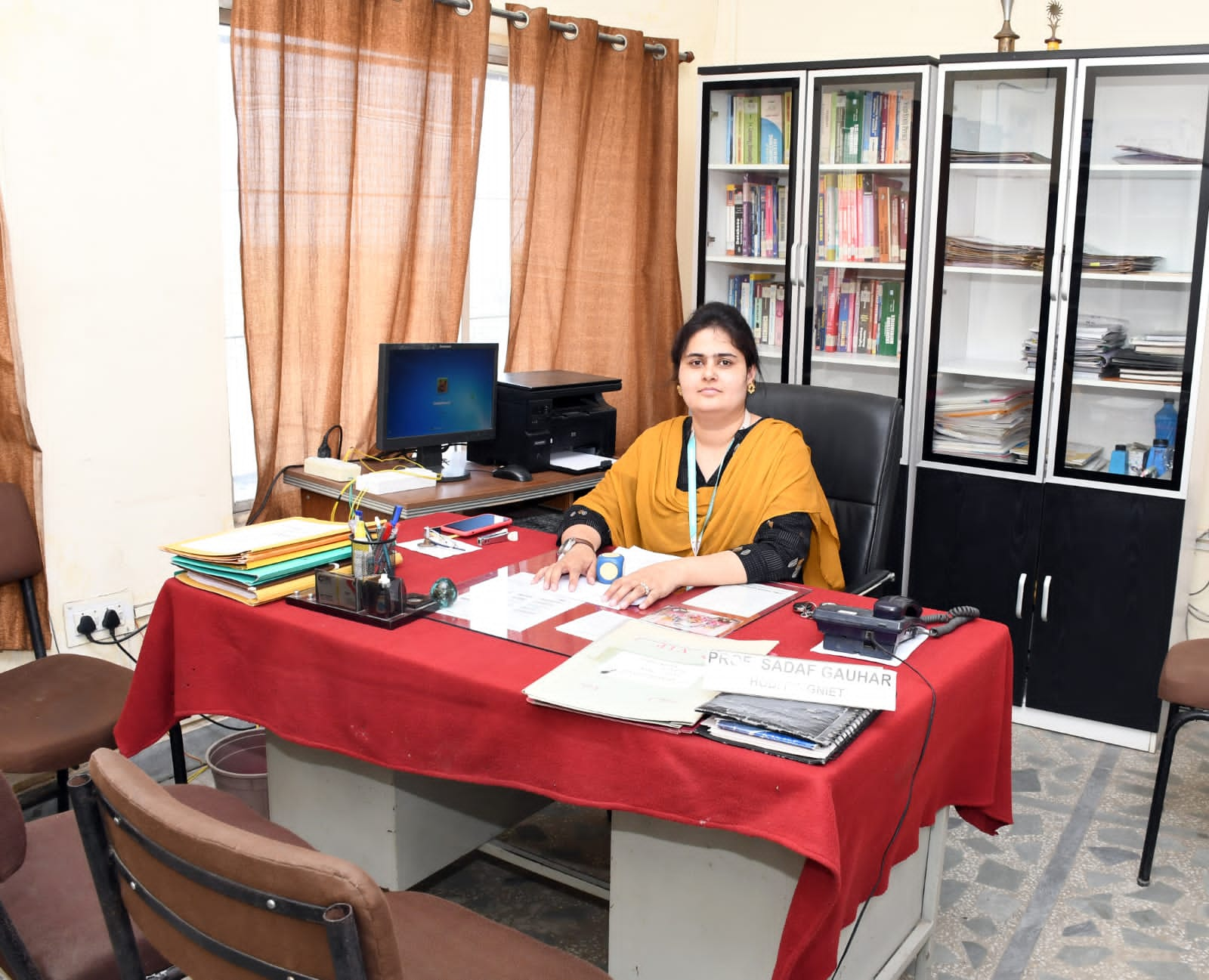
Dr. Sadaf Gauhar

Dr. Sadaf M. Gauhar

Professor

Qualification: B.Sc, M.Sc, Ph.D

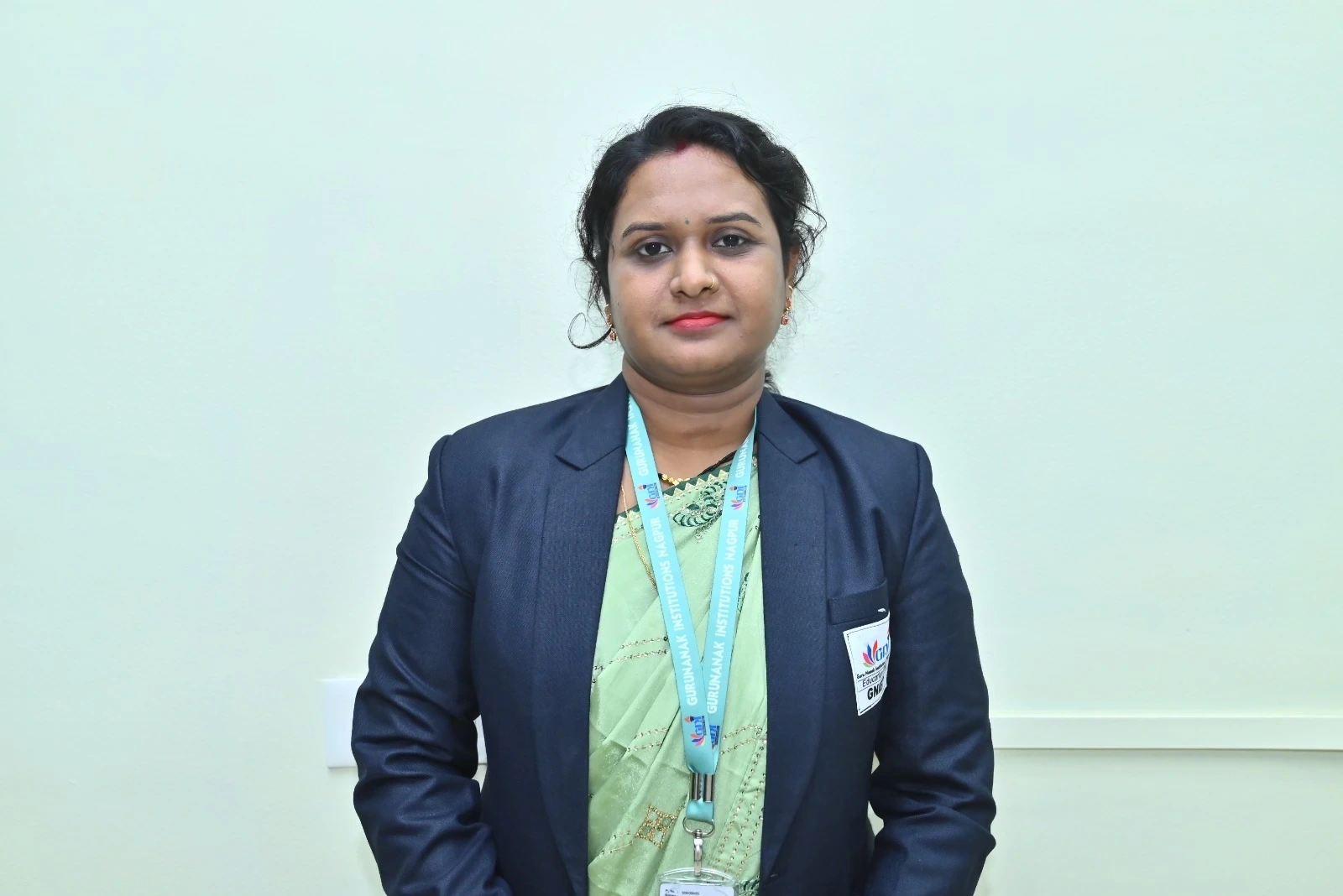
Ms. Priyadarshini Gotmare

Ms. Priyadarshani S. Gotmare

Associate Professor

Qualification: BE, ME

Ms. Shamina Siddique

Ms. Shamina A. Siddique

Associate Professor

Qualification: M.Ed, M.A, M.Phil

Mr. Rajesh Mate

Mr. Rajesh J. Mate

Associate Professor

Qualification: BE, M.Tech

Ms. Minakshi Dahake

Ms. Minakshi D. Dahake

Assistant Professor

Qualification: BE, M.Tech

Mr. Harshal Makde

Mr. Harshal V. Makde

Assistant Professor

Qualification: BE, M.Tech

Mr. Badal Lanjewar

Mr. Badal D. Lanjewar

Assistant Professor

Qualification: BE, M.Tech

Mr. Aditya Toney

Mr. Aditya P. Toney

Assistant Professor

Qualification: BE, M.Tech

Ms. Ashwini Gaikwad

Ms. Ashwini Gaikwad

Assistant Professor

Qualification: BE, M.Tech

Ms. Shital Gadekar

Ms. Shital R. Gadekar

Assistant Professor

Qualification: BE, M.Tech

Ms. Komal Satkar

Ms. Komal U. Satkar

Assistant Professor

Qualification: BE, M.Tech

Mr. Abhay Satmohankar

Mr. Abhay S. Satmohankar

Assistant Professor

Qualification: BE, M.Tech

Ms. Mohini Patil

Ms. Mohini D. Patil

Assistant Professor

Qualification: BE, M.Tech

Ms. Troshna Binkar

Ms. Troshna A. Binkar

Assistant Professor

Qualification: BE, M.Tech

Ms. Priyanshvi Yadav

Ms. Priyanshvi A. Yadav

Assistant Professor

Qualification: BE, M.Tech

Ms. Fouziya Ansari

Ms. Fouziya G. Ansari

Assistant Professor

Qualification: B.Sc, M.Sc

Ms. Vaishnavi Parhad

Ms. Vaishnavi V. Parhad

Assistant Professor

Qualification: B.Sc, M.Sc

Ms. Priyanshi Paliwal

Ms. Priyanshi D. Paliwal

Assistant Professor

Qualification: B.Sc, M.Sc

Ms. Prajakta Choudhari

Ms. Prajakta K. Choudhari

Assistant Professor

Qualification: B.Sc, M.Sc

Ms. Switi Maske

Ms. Switi R. Maske

Assistant Professor

Qualification: B.Sc, M.Sc

Ms. Manjusha Chavhan

Ms. Manjusha B. Chavhan

Assistant Professor

Qualification: B.Sc, M.Sc

Laboratories & Facilities

Programming Lab - 1
Programming Lab - 2
Programming Lab
DBMS Lab - 1
DBMS Lab - 2
DBMS Lab
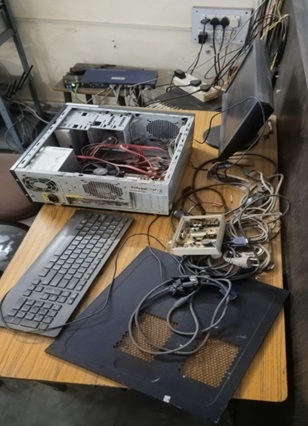
Hardware and Networking Lab - 1
Hardware and Networking Lab - 2
Hardware and Networking Lab

Faculty Achievement

Sr. No. Faculty Name Title Date Certificate
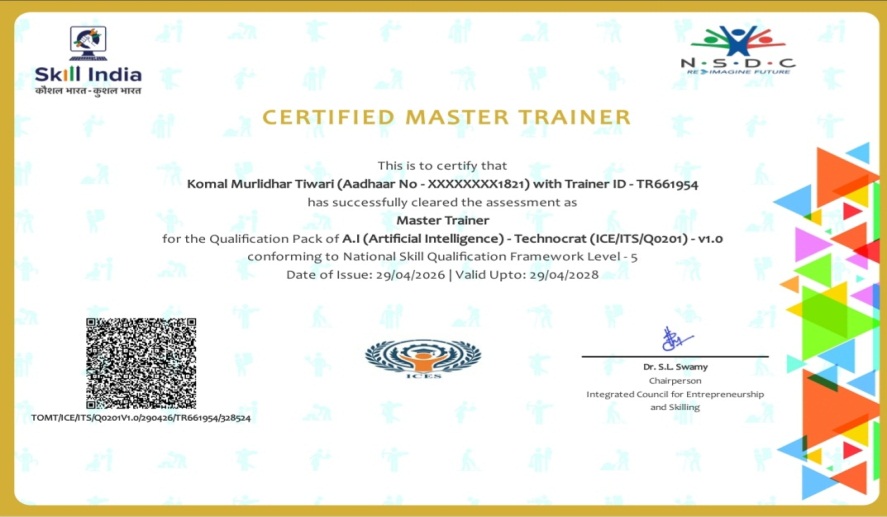
1 Prof. Komal Tiwari Certified Master Trainer in AI Technocrat (Skill India) 29/04/2026
Certificate
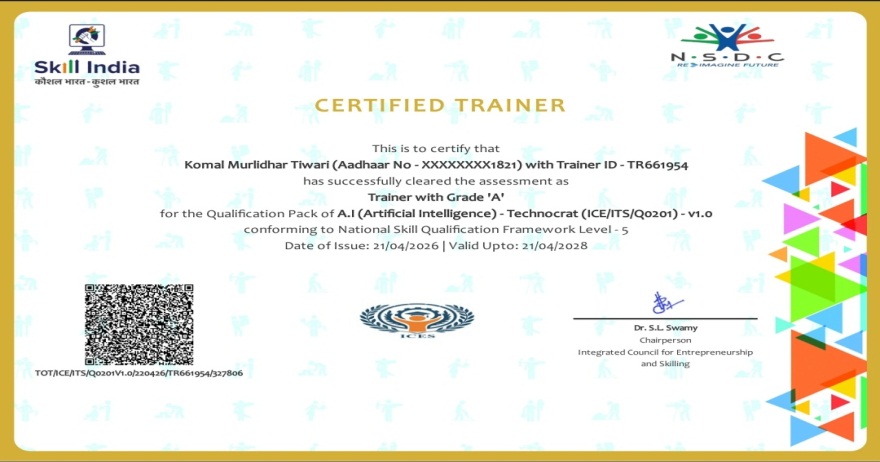
2 Prof. Komal Tiwari Certified Trainer in AI Technocrat (Skill India) 21/04/2026
Certificate
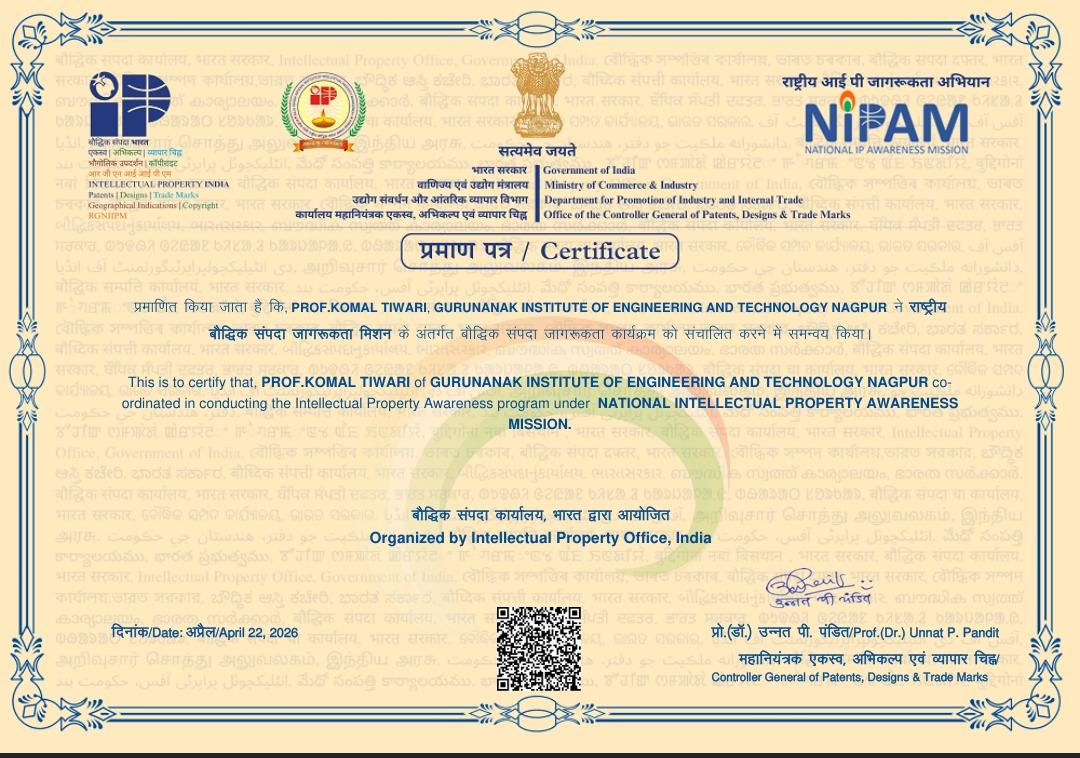
3 Prof. Komal Tiwari Participated in IP Awareness Training Program 22/04/2026
Certificate
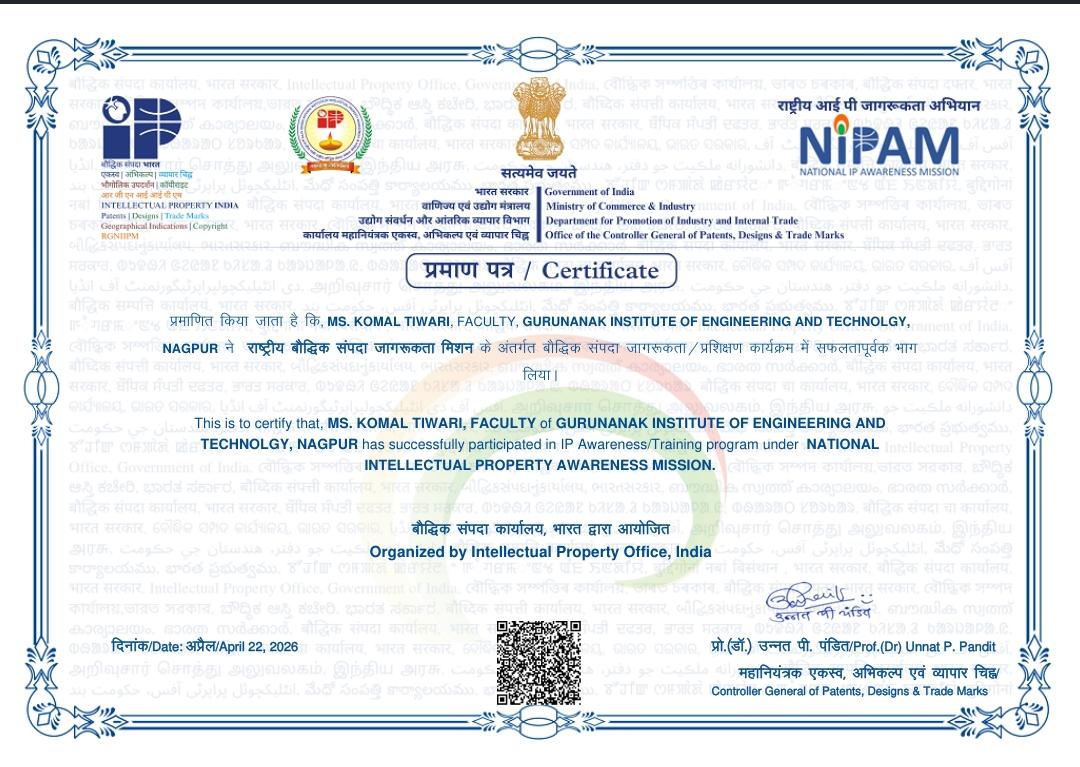
4 Prof. Komal Tiwari Participated in IP Awareness Training Program 22/04/2026
Certificate
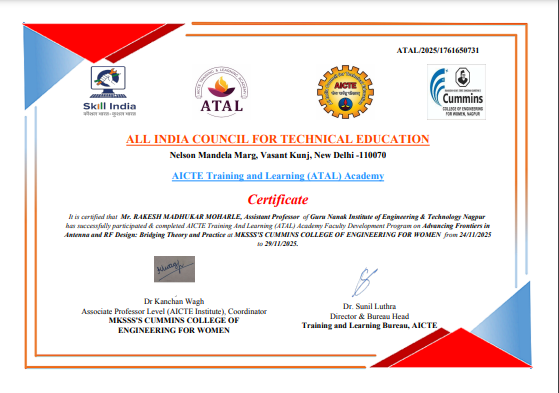
5 Prof. Rakesh Moharle Participated in FDP on Advancing frontier in antenna and RF Design 24/11/2025
Certificate
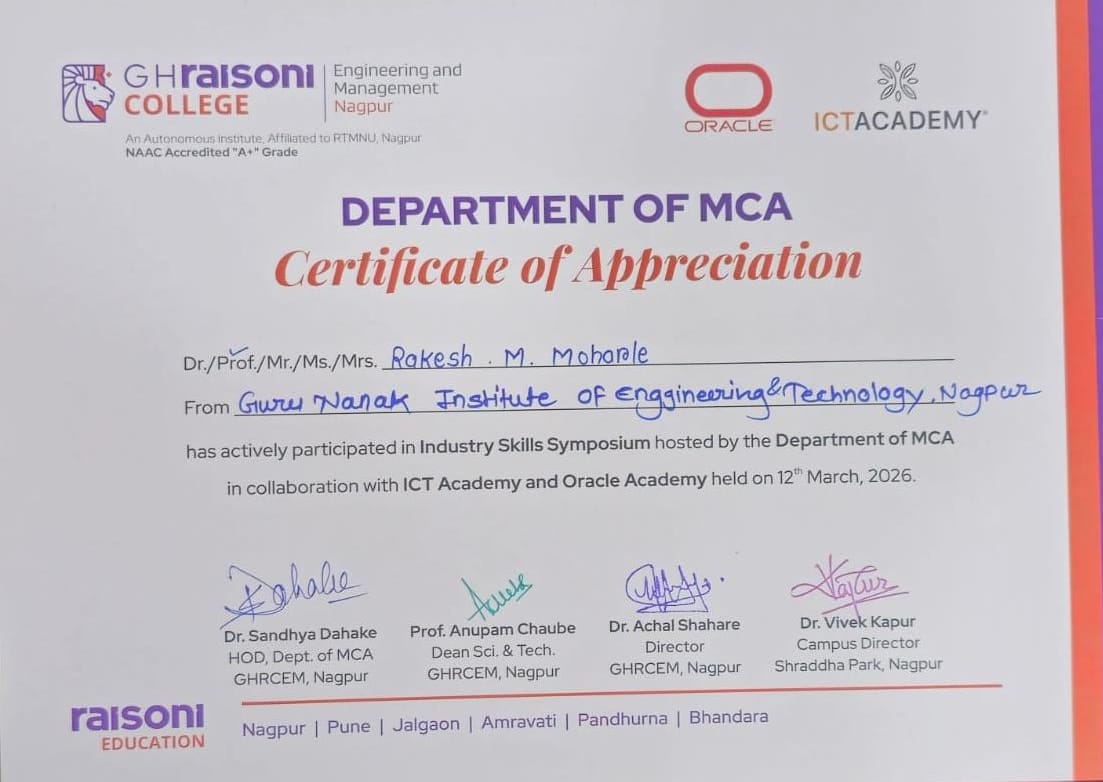
6 Prof. Rakesh Moharle Participated in Industry Skill Symposium 12/03/2026
Certificate
7 Dr. S.V Telrandhe STTP on Next Generation signal processing and Analysis: Emerging Techniques and real world Applications 06/01/2025 to 10/01/2025
Certificate
8 Dr. S.V Telrandhe Participated in Regional Meet 13/12/2026
Certificate

Students Achievement

1. Yuvarang-2026

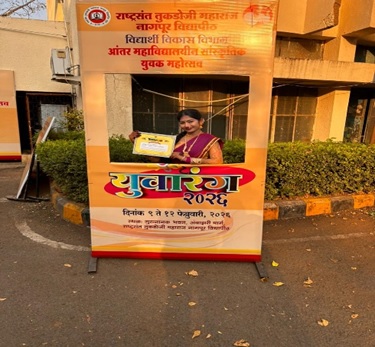
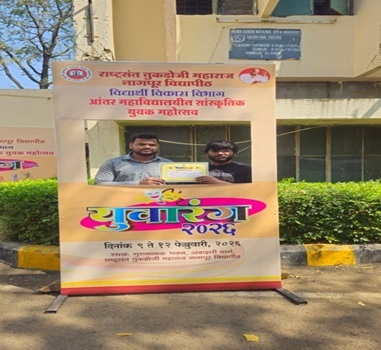
Students of GNIET, Nagpur participated in the Inter-Collegiate Cultural Youth Festival “Yuvarang-2026” organized by Rashtrasant Tukadoji Maharaj Nagpur University, Department of Student Development. Mr. Aditya Janrao (B.Tech Third Year – AI) participated in the On Spot Painting Competition, while Miss Janhvi Kothekar (B.Tech Third Year – CSDS) participated in Classical and Lavani Dance competitions and secured Third Prize in Lavani Dance. This achievement is especially significant as it marks GNIET’s first participation in Yuvarang and its first prize-winning performance.

Yuvarang 1
Yuvarang 2
Yuvarang 3
Yuvarang 4
2. Synergy-26

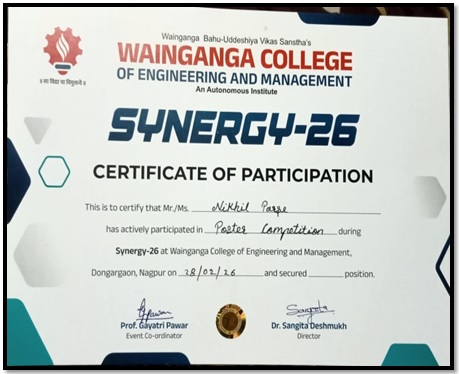
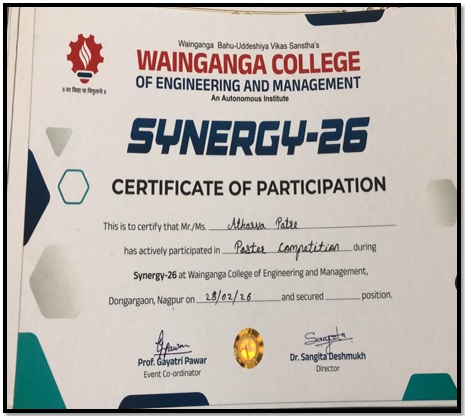
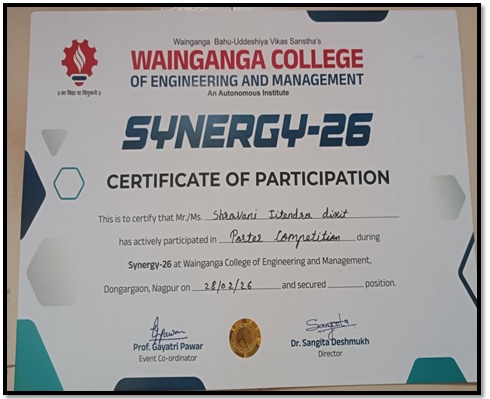
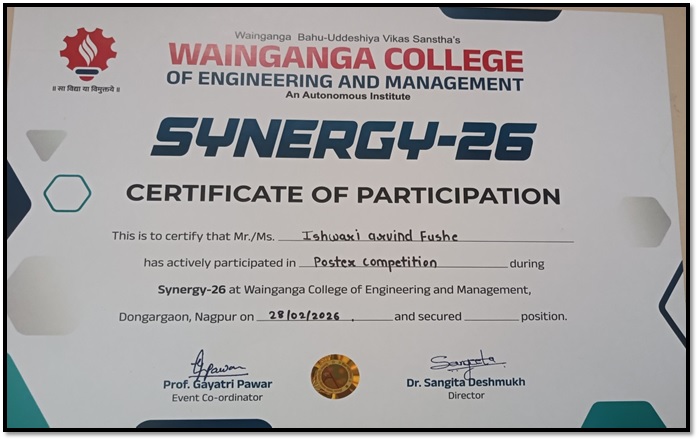
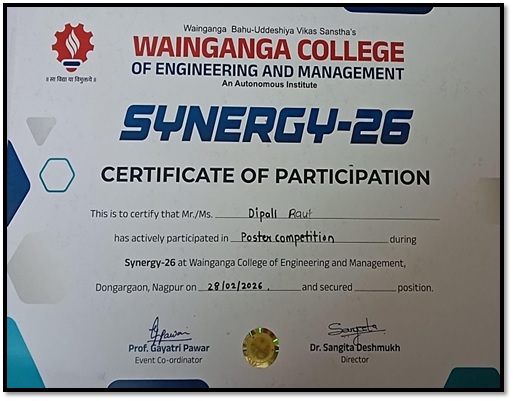
Students of the Information Technology Department, GNIET, Nagpur participated in the Poster Competition at “Synergy-26” organized by Wainganga College of Engineering and Management, Nagpur on 28th February 2026. The students showcased their technical knowledge and presentation skills and received Certificates of Participation.

Synergy 1
Synergy 2
Synergy 3
Synergy 4
Synergy 5

Student Forum

The CSE (Data Science) & IT Department Forum provides a platform for students to enhance their technical knowledge, leadership qualities, creativity, and teamwork skills through various academic, technical, cultural, and co-curricular activities.

The forum regularly organizes workshops, seminars, competitions, project presentations, and industrial visits to encourage innovation, research thinking, and overall personality development among students.

FORUM MEMBERS COMMITTEE
Sr. No. Post Name
1 Department Forum Incharge Prof. Ashwini Gaikwad
2 President Harish Galkar
3 Vice President Shraddha Kawade
4 Secretary Gaurav Uplenchwar
5 Treasurer Mansi Patil
6 Member Kaveri Jadhav
7 Member Rajlaxmi Jena
8 Member Yash Gaikwad
9 Member Anuj Ramteke
10 Member Divya Dukare
11 Member Lajvi Katre
12 Member Piyush Dhakate
13 Member Pratik Chavhan
14 Member Priya Meshram

Events and Activities

1. Expert Lecture (6th Semester Data Science)

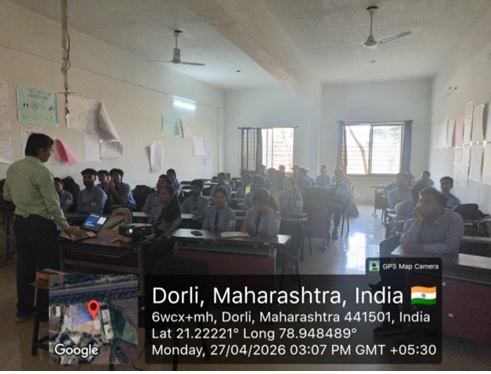
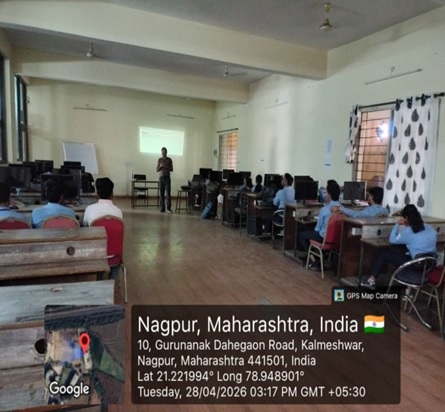
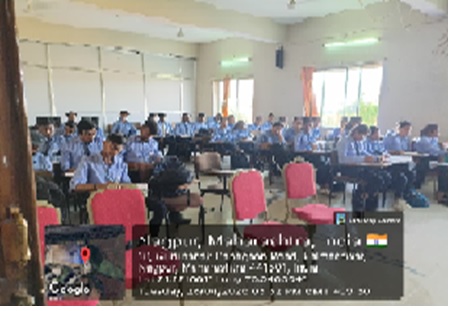
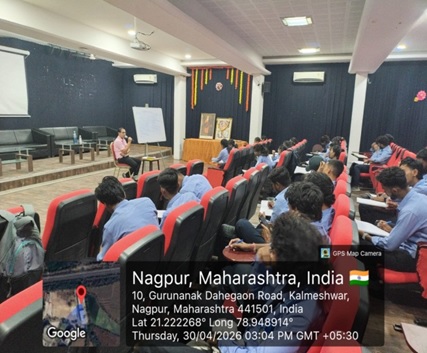
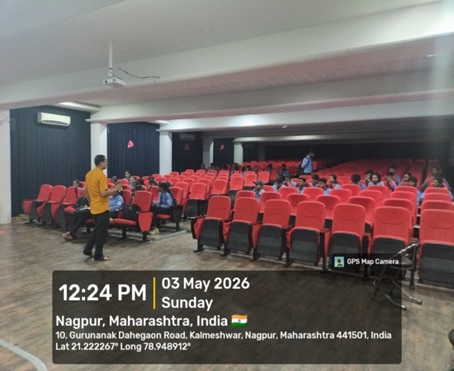
The Department of Computer Science & Engineering (Data Science) and Information Technology organized Guest Lectures for 6th Semester Data Science students during the academic session 2026–27 with experts from YCCE. The sessions were conducted from 27th April 2026 to 3rd May 2026 to enhance students’ knowledge of the latest technologies, industry trends, and practical applications in the field of Data Science and Information Technology. Students actively participated throughout the sessions with good attendance and interaction.

Expert Lecture 1
Expert Lecture 2
Expert Lecture 3
Expert Lecture 4
2. Expert Lecture (4th Semester TOC Extra Classes)

Department of Computer Science & Engineering (Data Science) and Information Technology conducted Theory of Computation (TOC) extra classes for 4th Semester DS students from 27th April 2026 to 3rd May 2026. The sessions were organized to strengthen students’ conceptual understanding and improve academic performance, with active participation and good attendance from students throughout the program.

TOC Class 1
TOC Class 2
TOC Class 3
TOC Class 4
TOC Class 5
TOC Class 6

Scheme & Syllabus

Access the latest scheme and syllabus for B.Tech programs as per university guidelines.

B.Tech Scheme & Syllabus

About Department

The Department of Computer Science & Engineering (Data Science) and Information Technology is committed to providing quality education, technical excellence, and practical learning in emerging technologies.

The departments focus on academic growth, innovation, and skill development through experienced faculty members and modern laboratories.

Various workshops, seminars, technical activities, and industrial visits are regularly organized to enhance students' technical knowledge and employability skills.

The departments also encourage industry interaction, internships, and hands-on training to prepare students for successful careers in the IT and software industries.
Vision & Mission

Vision
  • To be a center of excellence in Information Technology education by fostering innovation, technical expertise, research, and ethical values to meet global technological challenges.
Mission
  • To provide quality education in Information Technology through strong academic and practical learning.
  • To develop skilled professionals with problem-solving, analytical, and leadership abilities.
  • To encourage research, innovation, entrepreneurship, and lifelong learning among students.
  • To strengthen industry interaction through projects, internships, workshops, and technical activities.
  • To nurture socially responsible and ethically committed IT professionals for the betterment of society.

Head of Department

Ms. Priyadarshini Gotmare
Welcome to the Department of Computer Science & Engineering (Data Science) and Information Technology at Guru Nanak Institute of Technology. Our departments are committed to providing quality education, technical excellence, and practical exposure in the rapidly growing fields of Data Science and Information Technology.
We focus on developing skilled, innovative, and industry-ready professionals through modern laboratories, experienced faculty members, workshops, seminars, industrial visits, and hands-on learning opportunities. Our aim is to prepare students to meet the challenges of the evolving IT industry with confidence, knowledge, and ethical values.

We encourage students to actively participate in academic, technical, and co-curricular activities for their overall growth and successful career development.

Ms. Priyadarshini Gotmare

Head of Department

Program Offered / Intake

B.Tech. in Computer Science & Engineering (Data Science)
Name of the UG Program B.Tech. in Computer Science & Engineering (Data Science)
Number of Intake 60
Duration of Course 4 years
Year of Starting 2023
B.Tech. in Information Technology
Name of the UG Program B.Tech. in Information Technology
Number of Intake 60
Duration of Course 4 years
Year of Starting 2024

POs & PSOs

Bachelor of Technology in Computer Science & Engineering (Data Science)

Program Outcomes (POs)

  • PO1: Engineering Knowledge: Apply the knowledge of mathematics, science, engineering fundamentals, and engineering specialization to the solution of complex engineering problems.
  • PO2: Problem analysis: Identify, formulate and analyze hardware and software engineering problems and arrive at substantiated conclusions using first principles of mathematics, natural and engineering sciences.
  • PO3: Design/Development of solutions: Design and develop hardware / software system to meet desired needs within realistic constraints related to economic, environmental, social, political, ethical, health and safety, verifiability, and sustainability concerns.
  • PO4: Conduct investigations of complex problems: Use research based knowledge including design of experiments, analysis and interpretation of data and synthesis of the information to provide valid conclusions.
  • PO5: Modern tool usage: Use techniques, skills, and modern computer engineering tools, including simulation and modeling, for addressing the needs of engineering profession and interdisciplinary business.
  • PO6: The engineer and society: Understand the computing needs of inter-disciplinary scientific and engineering disciplines and design and develop algorithms and techniques for societal, health, safety, legal and cultural problems.
  • PO7: Environment and Sustainability: Understand the impact of the professional engineering solutions in societal and environmental contexts, and demonstrate the knowledge of and need for sustainable development.
  • PO8: Ethics: Apply ethical principles and commit to professional ethics and responsibilities and norms of the engineering practice.
  • PO9: Individual and team work: Function as member or leader of team and to understand engineering management principles & finance to manage projects in multidisciplinary environment.
  • PO10: Communications: Effectively transfer technology to engineering community and society at large on broadly defined engineering needs through technical reports, presentations and software technologies.
  • PO11: Project management and finance: Demonstrate knowledge and understanding of engineering and management principles and apply these to one's own work, as a member and leader in a team. Manage projects in multidisciplinary environments.
  • PO12: Life-long learning: Engage in lifelong learning and adapt to rapid changes in computer science & allied areas.

Program Specific Outcomes (PSOs)

  • PSO1: An ability to apply mathematical foundations, algorithmic principles and data science theory in the modeling and design of software systems of varying complexity.
  • PSO2: An ability to work with Open Source Software and use off the shelf utilities for program integration.

Bachelor of Technology in Information Technology

Program Outcomes (POs)

  • PO1: Engineering Knowledge: Apply the knowledge of mathematics, science, engineering fundamentals, and engineering specialization to the solution of complex engineering problems.
  • PO2: Problem analysis: Identify, formulate and analyze hardware and software engineering problems and arrive at substantiated conclusions using first principles of mathematics, natural and engineering sciences.
  • PO3: Design/Development of solutions: Design and develop hardware / software system to meet desired needs within realistic constraints related to economic, environmental, social, political, ethical, health and safety, verifiability, and sustainability concerns.
  • PO4: Conduct investigations of complex problems: Use research-based knowledge including design of experiments, analysis and interpretation of data and synthesis of the information to provide valid conclusions.
  • PO5: Modern tool usage: Use techniques, skills, and modern computer engineering tools, including simulation and modeling, for addressing the needs of engineering profession and interdisciplinary business.
  • PO6: The engineer and society: Understand the computing needs of inter-disciplinary scientific and engineering disciplines and design and develop algorithms and techniques for societal, health, safety, legal and cultural problems.
  • PO7: Environment and sustainability: Understand the impact of the professional engineering solutions in societal and environmental contexts, and demonstrate the knowledge of and need for sustainable development.
  • PO8: Ethics: Apply ethical principles and commit to professional ethics and responsibilities and norms of the engineering practice.
  • PO9: Individual and team work: Function as member or leader of team and to understand engineering management principles & finance to manage projects in multidisciplinary environment.
  • PO10: Communications: Effectively transfer technology to engineering community and society at large on broadly defined engineering needs through technical reports, presentations and software technologies.
  • PO11: Project management and finance: Demonstrate knowledge and understanding of engineering and management principles and apply these to one's own work, as a member and leader in a team. Manage projects in multidisciplinary environments.
  • PO12: Life-long learning: Engage in lifelong learning and adapt to rapid changes in computer science & allied areas.

Program Specific Outcomes (PSOs)

  • PSO1: An ability to apply mathematical foundations, algorithmic principles and computer science theory in the modeling and design of software systems of varying complexity.
  • PSO2: An ability to work with Open-Source Software and use off the shelf utilities for program integration.

Faculty Details

Dr. Sadaf Gauhar

Dr. Sadaf M. Gauhar

Professor

Qualification: B.Sc, M.Sc, Ph.D

Ms. Priyadarshini Gotmare

Ms. Priyadarshani S. Gotmare

Associate Professor

Qualification: BE, ME

Ms. Shamina Siddique

Ms. Shamina A. Siddique

Associate Professor

Qualification: M.Ed, M.A, M.Phil

Mr. Rajesh Mate

Mr. Rajesh J. Mate

Associate Professor

Qualification: BE, M.Tech

Ms. Minakshi Dahake

Ms. Minakshi D. Dahake

Assistant Professor

Qualification: BE, M.Tech

Mr. Harshal Makde

Mr. Harshal V. Makde

Assistant Professor

Qualification: BE, M.Tech

Mr. Badal Lanjewar

Mr. Badal D. Lanjewar

Assistant Professor

Qualification: BE, M.Tech

Mr. Aditya Toney

Mr. Aditya P. Toney

Assistant Professor

Qualification: BE, M.Tech

Ms. Ashwini Gaikwad

Ms. Ashwini Gaikwad

Assistant Professor

Qualification: BE, M.Tech

Ms. Shital Gadekar

Ms. Shital R. Gadekar

Assistant Professor

Qualification: BE, M.Tech

Ms. Komal Satkar

Ms. Komal U. Satkar

Assistant Professor

Qualification: BE, M.Tech

Mr. Abhay Satmohankar

Mr. Abhay S. Satmohankar

Assistant Professor

Qualification: BE, M.Tech

Ms. Mohini Patil

Ms. Mohini D. Patil

Assistant Professor

Qualification: BE, M.Tech

Ms. Troshna Binkar

Ms. Troshna A. Binkar

Assistant Professor

Qualification: BE, M.Tech

Ms. Priyanshvi Yadav

Ms. Priyanshvi A. Yadav

Assistant Professor

Qualification: BE, M.Tech

Ms. Fouziya Ansari

Ms. Fouziya G. Ansari

Assistant Professor

Qualification: B.Sc, M.Sc

Ms. Vaishnavi Parhad

Ms. Vaishnavi V. Parhad

Assistant Professor

Qualification: B.Sc, M.Sc

Ms. Priyanshi Paliwal

Ms. Priyanshi D. Paliwal

Assistant Professor

Qualification: B.Sc, M.Sc

Ms. Prajakta Choudhari

Ms. Prajakta K. Choudhari

Assistant Professor

Qualification: B.Sc, M.Sc

Ms. Switi Maske

Ms. Switi R. Maske

Assistant Professor

Qualification: B.Sc, M.Sc

Ms. Manjusha Chavhan

Ms. Manjusha B. Chavhan

Assistant Professor

Qualification: B.Sc, M.Sc

Laboratories & Facilities

Programming Lab - 1
Programming Lab - 2
Programming Lab
DBMS Lab - 1
DBMS Lab - 2
DBMS Lab
Hardware and Networking Lab - 1
Hardware and Networking Lab - 2
Hardware and Networking Lab

Faculty Achievement

Sr. No. Faculty Name Title Date Certificate
1 Prof. Komal Tiwari Certified Master Trainer in AI Technocrat (Skill India) 29/04/2026
Certificate
2 Prof. Komal Tiwari Certified Trainer in AI Technocrat (Skill India) 21/04/2026
Certificate
3 Prof. Komal Tiwari Participated in IP Awareness Training Program 22/04/2026
Certificate
4 Prof. Komal Tiwari Participated in IP Awareness Training Program 22/04/2026
Certificate
5 Prof. Rakesh Moharle Participated in FDP on Advancing frontier in antenna and RF Design 24/11/2025
Certificate
6 Prof. Rakesh Moharle Participated in Industry Skill Symposium 12/03/2026
Certificate
7 Dr. S.V Telrandhe STTP on Next Generation signal processing and Analysis: Emerging Techniques and real world Applications 06/01/2025 to 10/01/2025
Certificate
8 Dr. S.V Telrandhe Participated in Regional Meet 13/12/2026
Certificate

Students Achievement

1. Yuvarang-2026

Students of GNIET, Nagpur participated in the Inter-Collegiate Cultural Youth Festival “Yuvarang-2026” organized by Rashtrasant Tukadoji Maharaj Nagpur University, Department of Student Development. Mr. Aditya Janrao (B.Tech Third Year – AI) participated in the On Spot Painting Competition, while Miss Janhvi Kothekar (B.Tech Third Year – CSDS) participated in Classical and Lavani Dance competitions and secured Third Prize in Lavani Dance. This achievement is especially significant as it marks GNIET’s first participation in Yuvarang and its first prize-winning performance.

Yuvarang 1
Yuvarang 2
Yuvarang 3
Yuvarang 4
2. Synergy-26

Students of the Information Technology Department, GNIET, Nagpur participated in the Poster Competition at “Synergy-26” organized by Wainganga College of Engineering and Management, Nagpur on 28th February 2026. The students showcased their technical knowledge and presentation skills and received Certificates of Participation.

Synergy 1
Synergy 2
Synergy 3
Synergy 4
Synergy 5

Student Forum

The CSE (Data Science) & IT Department Forum provides a platform for students to enhance their technical knowledge, leadership qualities, creativity, and teamwork skills through various academic, technical, cultural, and co-curricular activities.

The forum regularly organizes workshops, seminars, competitions, project presentations, and industrial visits to encourage innovation, research thinking, and overall personality development among students.

FORUM MEMBERS COMMITTEE
Sr. No. Post Name
1 Department Forum Incharge Prof. Ashwini Gaikwad
2 President Harish Galkar
3 Vice President Shraddha Kawade
4 Secretary Gaurav Uplenchwar
5 Treasurer Mansi Patil
6 Member Kaveri Jadhav
7 Member Rajlaxmi Jena
8 Member Yash Gaikwad
9 Member Anuj Ramteke
10 Member Divya Dukare
11 Member Lajvi Katre
12 Member Piyush Dhakate
13 Member Pratik Chavhan
14 Member Priya Meshram

Events and Activities

1. Expert Lecture (6th Semester Data Science)

The Department of Computer Science & Engineering (Data Science) and Information Technology organized Guest Lectures for 6th Semester Data Science students during the academic session 2026–27 with experts from YCCE. The sessions were conducted from 27th April 2026 to 3rd May 2026 to enhance students’ knowledge of the latest technologies, industry trends, and practical applications in the field of Data Science and Information Technology. Students actively participated throughout the sessions with good attendance and interaction.

Expert Lecture 1
Expert Lecture 2
Expert Lecture 3
Expert Lecture 4
2. Expert Lecture (4th Semester TOC Extra Classes)

Department of Computer Science & Engineering (Data Science) and Information Technology conducted Theory of Computation (TOC) extra classes for 4th Semester DS students from 27th April 2026 to 3rd May 2026. The sessions were organized to strengthen students’ conceptual understanding and improve academic performance, with active participation and good attendance from students throughout the program.

TOC Class 1
TOC Class 2
TOC Class 3
TOC Class 4
TOC Class 5
TOC Class 6

Scheme & Syllabus

Access the latest scheme and syllabus for B.Tech programs as per university guidelines.

B.Tech Scheme & Syllabus